"I Survived. I Lived. Then I Woke Up."

Vay Teledriving Review: When "Ghost Cars" deliver Independence (Literally)
Vay isn’t autonomous AI—it’s teledriving. Discover how this "literal" delivery driver service changes the game for mobility, quality of life, and the future of getting behind the wheel.
Christopher J
1/21/20263 min read
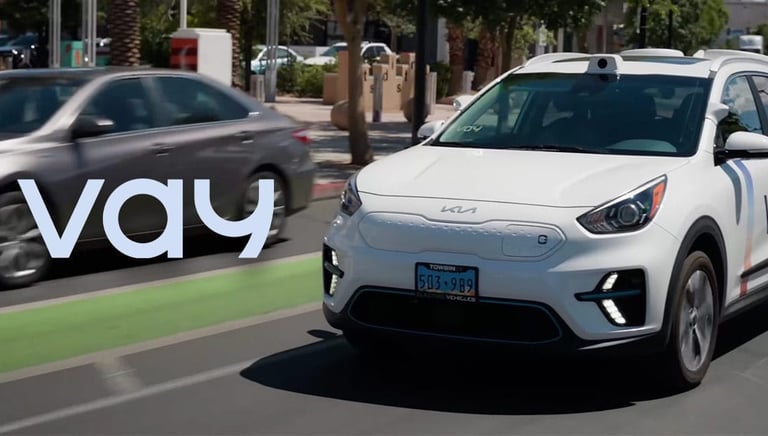
Vay Makes "Delivery Driver" Very Literal (And I’m Here For It)
Let’s be honest: seeing a car pull up to the curb with absolutely no one in the driver’s seat usually signals the start of a horror movie or a glitch in the Matrix. But in 2024, it just means your rental has arrived.
Meet Vay, the company that looked at the concept of a "delivery driver" and decided to take it painfully literally.
When I first heard about Vay, I asked my golden rule question: "Will this save someone's life or have an impact on quality of life?". After surviving a 3% chance of living and relearning how to walk after 55 days in a coma, I don’t have time for tech that’s just a shiny toy. I need utility. I need independence.
And Vay delivers. Literally.
The "Ghost Car" Phenomenon: It’s Not AI, It’s Steve
Here is the misconception: Vay isn't a robotaxis service hoping its AI doesn't mistake a traffic cone for a stop sign. It is Teledriving.
Here is how it goes down:
The Order: You tap a button on an app to rent a car.
The Delivery: A human being ("teledriver") sitting in a station with a steering wheel and monitors drives the empty car to your location remotely.
The Handover: The car arrives. The remote driver disconnects. You get in and drive yourself.
See what they did there? The driver isn't a chauffeur. They aren't a courier delivering a pizza. They are a driver whose only job is to deliver the car. It is the most literal interpretation of "Delivery Driver" I have ever seen, and frankly, the linguistic precision tickles my brain.
Why This Hit Home (The Survivor’s Perspective)
If you know my story, you know I spent 76 days in the ICU battling COVID-19, sepsis, and organ failure. When I woke up, I was paralyzed. I went from a healthy 30-year-old to someone who couldn't feed themselves, let alone drive.
Reclaiming my independence wasn't just about gym reps; it was about mobility.
The beauty of Vay is that it bridges the gap between "I need a ride" and "I want to drive." Rideshares can be awkward (sorry, I don't want to talk about the weather). Traditional car rentals involve standing in line at a counter while a dot-matrix printer screams in the background.
Vay removes the friction. For someone rebuilding their life, or just someone who values their time, having the vehicle come to you—so you can take control—is a massive quality-of-life upgrade.
The "Last Mile" Logic
Vay is also eyeing logistics. Imagine a truck being piloted from a warehouse to a drop-off point by a guy sitting in an office three towns over. It strips the role of the driver down to its absolute essentials: moving the asset.
It’s efficient, it’s clever, and it avoids the uncanny valley of AI making moral decisions in traffic. It’s just a human, a really good internet connection, and a steering wheel.
The Verdict
I battled trauma, fear, and uncertainty to get back to 198 lbs and a healthy life. I chose resilience. I view technology through that lens: does it make us more resilient?
Vay does. It uses advanced tech to empower human capability rather than replace it. It gives you the freedom of a personal vehicle without the ownership headaches or the rental counter wait times.
It’s weird, it’s literal, and it’s exactly the kind of future I fought to stay alive for.
Key Takeaways
Teledriving ≠ Autonomous: Vay uses remote human drivers, not AI, to navigate the vehicle to you.
Literal Delivery: The "driver" exists solely to deliver the vehicle, then disconnects so you can take the wheel.
Quality of Life: Eliminates the friction of rental counters and the awkwardness of rideshares, offering pure independence.
The Future of Logistics: This tech has massive potential for "last mile" delivery trucks, reducing human fatigue and logistical bottlenecks.
Frequently Asked Questions (FAQs)
1. Is the car driving itself? No! A professionally trained human "teledriver" controls the car remotely from a station equipped with steering controls and multiple camera feeds.
2. What happens when the car arrives? Once the teledriver parks the car at your location, they disconnect. You unlock the car via the app, and then you drive it manually just like any normal rental.
3. Why not just use a standard Uber or Lyft? Vay is for when you want to be the driver. It gives you the freedom to run errands, go on day trips, or commute without having a stranger in the car with you.
4. Is it safe? Yes. Vay uses redundant safety systems, and because it’s human-operated, you have human judgment behind the wheel rather than experimental AI.
Call to Action
Are you ready to let a ghost car pick you up? I want to hear from you. Would you trust a remotely driven car to pull up to your curb, or does the idea of an empty driver’s seat still freak you out? Drop a comment below or share this with a friend who hates rental car lines.
Stay stubborn, stay resilient.

Do you have a life changing story and want to help others with your experience and inspiration. Please DM me or Send me an email at the links below
Contact Me
© 2025. All rights reserved.
Privacy Policy