
The Frozen Enemy: Why Cold Air is Kryptonite for Post-COVID Lungs (And How to Fight Back)
I survived a global pandemic. I survived a coma. I survived my own immune system trying to liquidate my organs. I am, by all definitions, a tank.
So, it is a little humbling to admit that my current nemesis—the villain that sends me spiraling into a panic—is the frozen food aisle at the grocery store.
If you are part of the "scarred lung club" (Post-COVID Fibrosis, Long COVID, or just general respiratory rebellion), you know exactly what I’m talking about. You step outside on a crisp winter morning, or you walk into an office building where the AC is set to "Arctic Blast," and suddenly, your chest clamps down. It feels like someone poured quick-dry cement into your airways. You cough. You wheeze. You look for the nearest exit while people stare.
At FITIQ, we talk a lot about tenacity. Usually, that means pushing through the burn of a workout. But when it comes to lung recovery, tenacity means being smart enough to know when to retreat.
It turns out, there is hard science behind why your lungs act like a high-maintenance diva every time the thermometer drops. And understanding that science is the key to protecting the gains you’ve fought so hard for.
The Science of the "Freeze" (Translated from Medical Jargon)
We dug into some fascinating research—specifically a 2018 study on temperature and chronic respiratory diseases, and current clinical guidelines for fibrosis. Even though the 2018 study predates our current pandemic nightmare, the mechanics are identical.
Here is why your lungs hate the cold, and why you need to take it seriously.
1. The "Shrink Wrap" Effect (Bronchoconstriction)
Your lungs are dramatic. The study found that a sudden temperature drop of just 5°C (about 9°F) is enough to trigger "acute bronchoconstriction."
In plain English? Your airways panic and slam shut.
For a healthy person, breathing cold air is annoying. For us, with lungs that are already stiff and scarred from fibrosis, it’s a disaster. Our lung tissue has "reduced compliance," which is doctor-speak for "it doesn't stretch well." When the cold air hits those TRPM8 receptors (more on those little traitors in a second), the smooth muscle tightens.
Because we don't have the spare respiratory reserve, that tightening feels like suffocation. It’s not just in your head; your plumbing is literally shrinking.
2. The TRPM8 Betrayal
You know that feeling when you chew mint gum and then drink ice water, and your throat feels like it's freezing? That’s the TRPM8 receptor. It’s a protein that senses cold.
Research suggests that in damaged lungs, these receptors are "upregulated." Basically, your lungs have installed way too many of these sensors. They are hypersensitive.
So, while a normal person walks into an air-conditioned room and thinks, "Ah, refreshing," your upregulated TRPM8 receptors scream, "WE ARE UNDER ATTACK!" and trigger coughing fits and mucus production to try to "wash away" the cold. It’s a biological overreaction, but it’s one we have to manage.
3. The "Dried Sponge" Problem
Your lungs have a self-cleaning feature called the "mucociliary escalator." Imagine millions of tiny hairs (cilia) doing ‘The Wave’ to push mucus and bacteria up and out of your lungs. It’s gross, but it keeps you alive.
Cold air is usually dry air. When you breathe it in, it evaporates the fluid lining your airways.
Think of a kitchen sponge. When it’s wet, it cleans well. When it’s dry and crusty, it’s useless. Cold air turns your airway lining into a dry sponge. The cilia get paralyzed. They stop moving.
The Result: Bacteria, viruses, and pollutants get trapped in your lungs because the escalator is broken. For fibrosis patients, this is the danger zone. We are already prone to infections. If we let our airways dry out, we are rolling out the red carpet for pneumonia—which is the "Second Hit" we absolutely cannot afford.
The FITIQ Protocol: Environmental Optimization
Okay, enough doom and gloom. We are survivors. We don't just accept that the air wants to kill us; we adapt. We overcome. We optimize.
Here is the FITIQ Environmental Protocol for keeping your lungs happy, hydrated, and infection-free.
1. The Goldilocks Zone (Temperature & Humidity)
You need to become a dictator about your thermostat. The guidelines suggest maintaining an indoor humidity between 40–60%.
<40%: Too dry. Your cilia stop working. You get infections.
>60%: Too wet. Mold grows. You get fungal infections.
Invest in a hygrometer (they cost like $10 on Amazon). If it’s dry, run a humidifier with distilled water (don't breathe tap water minerals). If it’s wet, get a dehumidifier.
Temperature Rule: Keep your home above 18°C (64°F). The 2018 study actually recommends avoiding indoor temps below 24°C (75°F) for respiratory patients. Yes, that is warm. Yes, your energy bill might go up. But oxygen is priceless, so crank the heat.
2. The Scarf Rule (Look Cool, Stay Warm)
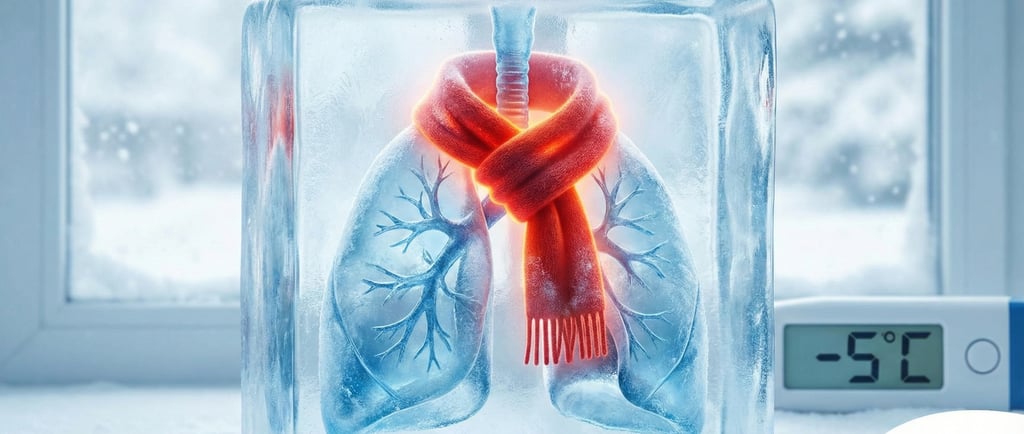
This is the single most effective hack I use. When the temperature drops below 10°C (50°F), do not step outside without a scarf wrapped loosely over your nose and mouth.
You aren't just making a fashion statement. You are creating a Heat and Moisture Exchange (HME) chamber.
When you exhale, you trap warm, moist air in the scarf fabric. When you inhale, you pull that warmth back in, mixing it with the cold outside air. By the time the air hits your sensitive trachea, it’s been pre-warmed. It stops the bronchospasm before it starts.
3. Nasal Breathing: Nature’s HVAC
I preach this constantly: Shut your mouth.
Your nose is an engineering marvel. It filters, warms, and humidifies air. Your mouth is just a hole. Mouth breathing delivers cold, dry, dirty air directly to your fragile lungs. Nasal breathing conditions the air first. If you are walking outside and find yourself gasping through your mouth, you are moving too fast. Slow down. Reset. Breathe through the nose.
4. The "Second Hit" Defense
Post-COVID fibrosis is different from traditional Idiopathic Pulmonary Fibrosis (IPF). IPF is usually progressive (it gets worse). Post-COVID fibrosis has shown potential for reversibility or stabilization.
That means we are playing for high stakes. If we can protect our lungs from "Second Hits"—new infections, pollution flares, mold exposure—we give our tissue the stability it needs to remodel and heal.
HEPA Filters: Put one in your bedroom. It clears the "background noise" of dust and dander so your immune system can rest at night.
Zero Smoke: No candles. No incense. No wood fires. I know they smell nice, but they are releasing VOCs that irritate your scars.
AQI Checks: If the Air Quality Index shows high particulate matter (PM2.5), that is not a "push through it" day. That is an "indoor workout" day.
The Bottom Line
Recovering from lung failure isn't just about lung capacity; it's about environmental awareness. You wouldn't drive a race car off-road, so don't take your high-performance (albeit recovering) lungs into hostile environments without protection.
Wear the scarf. Buy the humidifier. Dodge the AC vent. It’s not paranoia; it’s performance.
Key Takeaways
Cold Air = Constriction: A temperature drop of just 5°C can cause your airways to slam shut (bronchoconstriction), causing severe shortness of breath in fibrosis patients.
Humidity Matters: Dry air paralyzes your lungs' natural cleaning system (cilia), increasing infection risk. Keep indoor humidity between 40-60%.
The Scarf Hack: Wearing a scarf over your nose creates a "pre-warming" chamber, preventing cold air from shocking your lungs.
Sick Buildings: Poorly maintained AC units can spread mold, which is dangerous for immunocompromised fibrosis survivors.
Reversibility: Unlike other forms of fibrosis, Post-COVID lung damage may improve over time if you protect the lungs from secondary insults like cold, pollution, and infection.
FAQ: Temperature, Recovery, and FITIQ Living
Q: Why do I cough so much when I walk into the frozen food aisle? A: That is your TRPM8 receptors overreacting! These "cold sensors" in your throat are likely upregulated (hypersensitive) due to your lung damage. They sense the cold and immediately trigger a cough reflex to try and "clear" the irritation. Wear a mask or scarf even in the grocery store if this triggers you.
Q: Can I use a regular humidifier? A: Yes, but be careful. "Cool mist" humidifiers can sometimes disperse minerals or bacteria if you don't clean them religiously. Use distilled water to prevent breathing in mineral dust, and clean the unit weekly with vinegar to prevent mold growth.
Q: My doctor said I need fresh air, but it’s cold. What do I do? A: Fresh air is great; freezing air is not. Try to go out during the warmest part of the day (usually 1:00 PM - 3:00 PM). Use the "Scarf Rule" to pre-warm the air. If it is extremely cold (below freezing), the risk of bronchospasm outweighs the benefit of fresh air—stay inside and open a window slightly in a warm room instead.
Q: Is air conditioning actually dangerous for me? A: It can be. Aside from the cold air triggering spasms, dirty AC filters are mold factories. If you have central air, get your ducts cleaned and use high-quality filters. If you use window units, clean the filters monthly. Avoid sitting directly in the draft of a vent.
Q: I feel fine, do I really need to worry about all this? A: If you have Post-COVID fibrosis, yes. Your "respiratory reserve" is lower than you think. You might feel fine at rest, but cold air eats up that reserve instantly. Plus, preventing a secondary pneumonia is the #1 way to ensure your lungs keep healing. Don't gamble with your progress