"I Survived. I Lived. Then I Woke Up."

OpenAI Dropped $100M on Torch Health: Why Your Doctor Might Be an App Soon (But in a Good Way)
OpenAI Agrees to Buy AI Healthcare App For About $100 Million
Christophr J
1/20/20263 min read


The Acquisition: Torch Health — A Medical Memory for AI
On January 19, 2026, the tech world buzzed with news that could fundamentally reshape healthcare. OpenAI, the behemoth behind GPT, acquired Torch Health, a burgeoning startup founded just a year prior in January 2025. The price tag? A cool $60 million to $100 million, a significant investment signaling a strategic pivot.
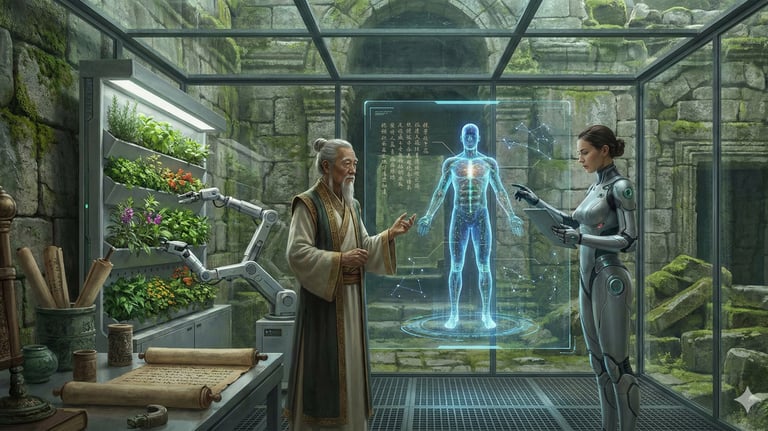
Torch Health's genius lies in its context engine. Imagine a universal translator for your health data, unifying scattered records from hospitals, labs, even your Fitbit, and consumer testing companies like 23andMe. It's building a "medical memory" layer, enabling AI to move beyond generic advice and provide personalized answers based on your unique biology and history. This acquisition isn't just about data; it's about building a digital primary care physician, an AI that truly knows you.
Generative AI in Personalized Medicine: A New Era
The synergy between Torch's data unification and OpenAI's powerful Gemini and GPT models is unleashing a new wave of innovation:
Drug Discovery: AI simulates molecular structures, identifies treatment candidates, and optimizes clinical trials at an accelerated pace. This enables hyper-personalized treatment plans, especially in cancer care, tailored to individual DNA to minimize side effects.
•
Medical Imaging: Multimodal AI analyzes X-rays, CT scans, and MRIs, achieving high accuracy (e.g., 94% in detecting lung nodules) and spotting issues human eyes might miss due to fatigue. This dramatically enhances diagnostic capabilities for medical professionals.
Real-World Impact: Survival Stories Enabled by AI
AI isn't just promising; it's already saving lives:
Sepsis Detection: AI systems monitor vital signs in hospitals, alerting doctors to sepsis hours before symptoms appear, reducing mortality rates by over 30% in high-risk groups.
•
Stroke Detection: AI analyzes brain scans in seconds, enabling faster intervention and improving patient outcomes.
•
Breast Cancer Diagnosis: AI-enhanced imaging detects subtle abnormalities in mammograms years earlier, leading to a reported 20% higher diagnosis rate in some hospitals.
The Mental Health Paradox: Robophobia vs. Accessibility
The impact of AI on mental health is a nuanced story, a paradox of fear and progress:
Benefits:
•
24/7 Support: AI chatbots offer round-the-clock availability, a lifeline for many.
•
Accessibility: Crucial for rural areas or individuals facing barriers to traditional therapy.
•
"Practice" Sessions: A safe space to articulate difficult feelings before human therapy.
Drawbacks:
"Algorithm aversion": Concerns about privacy, data security, and the lack of genuine human connection.
"WebMD Effect": Over-reliance on machines could lead to unnecessary panic or even social withdrawal.
Stoicism for the Digital Age: Navigating AI in Healthcare
The emergence of AI in such a personal realm as healthcare can stir anxiety. Here, ancient Stoic philosophy offers a surprisingly apt framework:
Epictetus: "It's not what happens to you, but how you react to it that matters." Our judgments about AI, rather than the technology itself, can disturb us. Focus on your reaction.
•
Marcus Aurelius: "You have power over your mind — not outside events." In digital health, this means controlling your lifestyle, understanding data permissions, and wisely reacting to diagnoses.
Seneca: "It is not the man who has too little, but the man who craves more, that is poor." Don't bemoan the troubles; use the tools available (like AI for early detection) virtuously.
Key Takeaways
•
OpenAI acquired Torch Health for ~$100M to create a "medical memory" for AI, unifying patient records.
•
This enables personalized AI that understands individual medical histories.
•
AI is already significantly reducing mortality rates through early detection of conditions like sepsis and stroke.
•
Applying Stoic principles helps navigate fears about AI in healthcare by focusing on controllable aspects and accepting AI as an aid.
(FAQ)
How does OpenAI use ChatGPT Health data?
OpenAI states ChatGPT Health data is private and not used to train foundational models, ensuring patient confidentiality.
Can ChatGPT Health replace a professional medical diagnosis?
No, ChatGPT Health is an intelligent assistant, designed to augment healthcare professionals and inform patients, not replace professional medical diagnosis.
What is Point-of-Care Ultrasound (POCUS)?
POCUS is a growing trend where AI assists novice operators in using handheld ultrasound scanners for immediate diagnostic imaging at the patient's bedside.
Embrace the Future of Health
The future of healthcare is unfolding rapidly. Don't be a passive observer. Engage with this evolving landscape by understanding the technology, managing your privacy, and leveraging generative AI for your wellness journey.
Do you have a life changing story and want to help others with your experience and inspiration. Please DM me or Send me an email at the links below
Contact Me
© 2025. All rights reserved.
Privacy Policy