"I Survived. I Lived. Then I Woke Up."
Forget Step Counters: Why the Fort Wearable is the New King of Strength & Longevity
Cardio trackers are lying to you. Discover why the Fort wearable is disrupting the fitness industry by focusing on what actually matters: muscle and longevity.
Christopher J
3/19/20263 min read
The Death of the Cardio Monopoly: Why Your Fitness Tracker is Lying to You
Let’s be real: Silicon Valley has spent the last decade trying to convince us that "health" is just a series of long walks and counting how many times your heart beats while you're sitting in traffic. They’ve flooded the market with glowing rectangles that prioritize VO2 max and step counts while completely ignoring the biological currency that actually keeps you alive: muscle.
I know a thing or two about what keeps a human body running. In 2021, I woke up from a 55-day coma with a 3% survival chance, weighing a skeletal 104 lbs. I didn’t rebuild my life to 198 lbs of "metabolic armor" by hitting a daily step goal. I did it through precision, strength, and refusing to accept the "standard" recovery path.
That’s why I’m calling out the cardio monopoly. And that’s why the Fort wearable is about to make your current smartwatch look like a high-tech mood ring.
Engineering Without the Ego
Most trackers fail because they want your attention. They vibrate, they glow, and they demand you tap a tiny screen while you’re mid-set with 315 lbs on your back. It’s distracting, it’s friction-heavy, and frankly, it’s annoying.
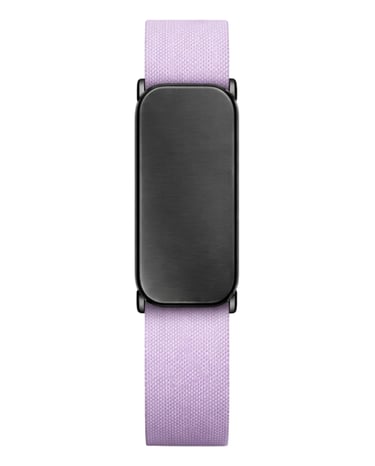
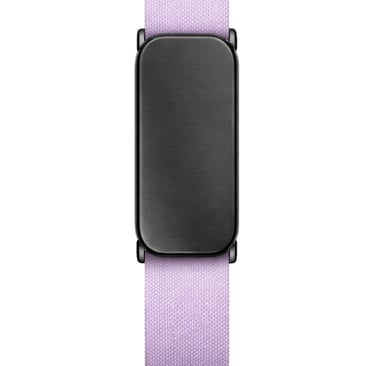
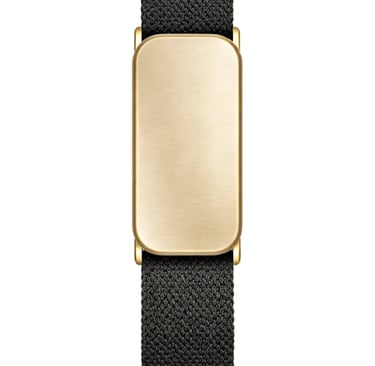
The Fort device—engineered by former Tesla experts—is a radical act of subtraction. It’s a slim, screenless wearable designed to disappear. No notifications, no distractions, just elite-level sensor fusion. Because when you’re in the "warrior mindset" of a heavy session, the last thing you need is a "Move!" alert.
The Strength Intelligence: Data That Actually Matters
Traditional trackers are great at telling you how far you walked to the fridge. Fort is built for the weight room. It uses a magnetic system to attach to your wrist, the barbell, or lifting straps—placing the sensors exactly where the "kinetic transfer of force" happens.
Here is why this is a game-changer for anyone using FiT iQ or looking to maximize their quality of life:
Hypertrophy Optimization: It doesn't just count reps; it measures your proximity to failure. If you aren’t hitting those last three "grinder" reps, you aren't growing. Fort knows the difference.
Kinematic Analysis: By tracking bar velocity, the system predicts central nervous system (CNS) fatigue before you even feel it. It’s like having a coach who can see inside your neurons.
The Session Score: Instead of "calories burned" (which is mostly guesswork), you get a proprietary score that synthesizes intensity, volume, and recovery. It’s the ultimate gamification of discipline.
The Longevity Ecosystem: More Than Just Muscle
My journey from a trach tube to a treadmill taught me that physical strength is only half the battle; the other half is systemic resilience. Fort is positioning itself as a full-spectrum longevity tool, tracking Heart Rate Variability (HRV) and granular sleep cycles.
But the real "holy grail"? Their upcoming bloodwork integration. Imagine seeing how a heavy deadlift session impacts your cortisol and testosterone markers in real-time. This isn’t just fitness tracking; it’s precision medicine.
The Verdict: Is It Worth the Disruption?
The industry is shifting. The era of generic PDFs and basic step counters is dead. Whether you’re a high-level coach or someone fighting their way back from a setback like I did, you need tools that understand the biomechanics of resistance.
Fort is currently launching with a heavy discount—$289 (including a year of software)—but they’ve capped it at 1,000 units. It’s a bold move, but in a world full of cardio noise, a little bit of strength-focused signal is exactly what we need.
Key Takeaways
Muscle is Longevity: Cardio isn't enough; strength training is the ultimate metabolic armor.
Frictionless Design: Fort’s screenless, magnetic hardware removes the "distraction factor" from lifting.
Precision Metrics: Tracks bar velocity, proximity to failure, and CNS fatigue rather than just "steps."
Future-Proof: Upcoming bloodwork and HRV integrations move the device into the realm of precision health.
FAQs
1. Why should I care about "bar velocity"? Velocity is the most accurate way to measure fatigue. If your 100 lb squat moves slower than usual, your nervous system is tired, even if your muscles feel fine. Fort helps you avoid overtraining before it happens.
2. Can I use it for cardio too? Yes, it tracks foundational metrics like heart rate and sleep, but its "superpower" is strength tracking where other wearables fail.
3. Is it hard to set up? No. It’s designed to be "hands-free." It automatically detects over 50 exercises, so you can spend less time scrolling and more time lifting.
Call to Action
Are you still chasing 10,000 steps, or are you ready to start tracking the metrics that actually build a resilient body? Drop a comment below: What’s the one metric you wish your current wearable actually tracked accurately? ---

Do you have a life changing story and want to help others with your experience and inspiration. Please DM me or Send me an email at the links below
Contact Me
© 2025. All rights reserved.
Privacy Policy