"I Survived. I Lived. Then I Woke Up."
Real Strength Weeps: A Survivor’s Guide to Emotional Intelligence in the AI Age
From Mr. Rogers to the metaverse: discover why emotional vulnerability is your greatest superpower. A coma survivor’s take on Stoicism, AI therapy, and the strength it takes to cry.
Chritopher J
1/20/20264 min read
Real Strength Weeps: A Survivor’s Guide to Emotional Intelligence in the AI Age
"It takes strength to face our sadness... and to let our grief and our anger flow in tears when they need to." — Fred Rogers
Let’s be honest: Mr. Rogers was the original influencer, and he didn't even need a ring light. In a world where we are increasingly glued to screens, doom-scrolling through other people's highlight reels, his vintage wisdom hits harder than a double-shot of espresso.
I know a thing or two about needing strength. One minute, I was a healthy 30-year-old, newly engaged with a shiny new car. The next? I was waking up from a 55-day coma, 90 pounds lighter, and paralyzed.
When the doctors told me I’d never live a normal life again and that my lungs were essentially toast, I had a choice. I could have bottled it up. Instead, I learned that true resilience isn't about having a stiff upper lip; it's about acknowledging the pain so you can fight through it.
Here is how we can blend that timeless wisdom with cutting-edge tech to find our sanity again.
Mr. Rogers vs. The "Man Up" Mentality
Fred Rogers taught us that pounding piano keys is a healthy outlet for anger. It’s certainly cheaper than therapy and safer than punching a wall. Dr. Dan Siegel calls expressing feelings a "neurological superpower."
When I was in the ICU, unable to sit up or feed myself, I felt weak. But admitting that I was terrified wasn't weakness; it was the first step in my "mental warfare" to recover. We have to stop viewing emotions as bugs in our operating system. They are features.
AI: Your Emotional Co-Pilot (Not Your Mom)
We are entering an era where AI wants to be your therapist. We have "Griefbots"—digital simulations of lost loved ones—and algorithms that track your mood better than your spouse does.
But here is the catch:
The Pro: AI is great for data. I love using tech to track health breakthroughs.
The Con: AI doesn't have a soul. It can simulate empathy, but it doesn't feel it.
Think of AI as a bridge. It can help you organize your thoughts or find resources, but it cannot hold your hand when you are staring down a scary diagnosis. Use the tools, but don't forget to hug a human.
VR and Biofeedback: Hacking Your Zen
If you think meditation is just for monks, welcome to the future. Virtual Reality (VR) and Augmented Reality (AR) are changing the game.
Virtual Courage: VR exposure therapy can help you conquer fears in a simulation so you don't panic in real life.
Biofeedback: Imagine seeing your heart rate and brainwaves in real-time. It’s like a video game where the high score is "Not Having a Panic Attack."
When I was relearning to walk with an oxygen tank strapped to my back, I would have killed for a VR headset to transport me to a beach. These tools are making mental resilience accessible, turning "calming down" into a trainable skill.
The Modern Stoic: Control What You Can
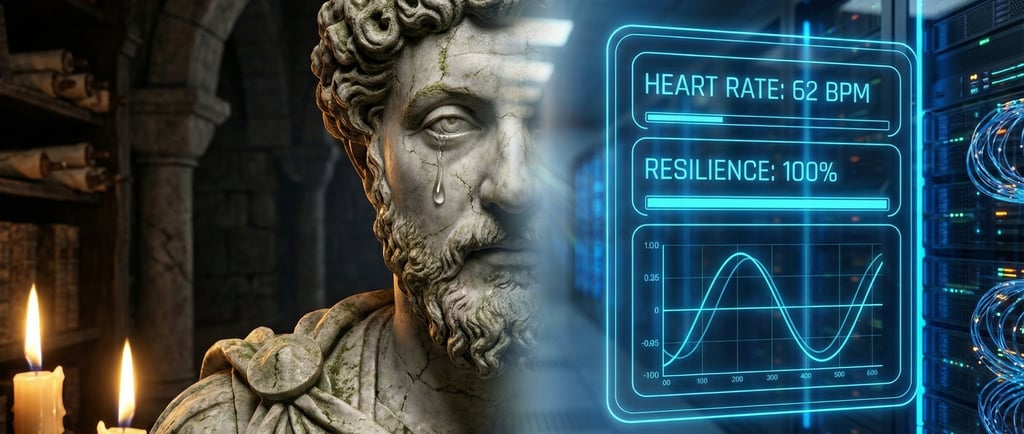
Stoicism often gets a bad rap as "suppressing emotions." That is wrong. Marcus Aurelius wasn't a robot; he was an emperor dealing with a crumbling empire (and probably a lot of stress).
Stoicism is about knowing the difference between what you can control and what you can't.
I couldn't control that the Delta variant wrecked my lungs.
I could control my rehab plan and my refusal to surrender.
The doctors predicted permanent pulmonary fibrosis and round-the-clock care. I used my background in fitness and psychology to build my own plan. Twenty-four months later? No fibrosis. No oxygen tank. Just a stubborn survivor.
That is Stoicism. It’s not about not crying; it’s about drying your eyes and getting back on the treadmill.
Finding the Silver Lining
I’m grateful for what I went through. It sounds crazy, right? But surviving the impossible gave me a mindset forged like a warrior.
You don't need to survive a coma to be a hero. You just need to survive today. Whether you use ancient philosophy, a therapist, or a shiny new app, the goal is the same: to live intentionally with purpose, rather than just existing.
Key Takeaways
Feelings are Fuel: Suppressing emotions leads to burnout. Expressing them builds neurological resilience.
Tech is a Tool: AI and VR are incredible for support and training, but they replace neither human connection nor professional help.
Be a Stoic, Not a Stone: Focus on your reactions and actions (the controllable), not the external chaos (the uncontrollable).
Defy the Odds: Experts and data are useful, but never underestimate the power of a "stubborn survivor" mindset.
FAQs
Q: Can AI really replace a human therapist? A: Hard no. AI is like a really smart journal that talks back. It’s great for patterns and support, but it can't offer genuine empathy or human connection.
Q: Isn't Stoicism just about not showing emotion? A: Nope. That's "Bro-icism." Real Stoicism is about emotional regulation—feeling the feeling, understanding it, and then choosing a rational response rather than letting it control you.
Q: I haven't been through a major trauma like a coma; does this apply to me? A: Absolutely. We all face "mini-apocalypses"—breakups, job losses, grief. The resilience required to navigate daily life is the same muscle used to survive the big stuff.
Call to Action
Are you surviving or are you living? If you are ready to stop existing and start defying the odds, join the community. Drop a comment below about a piece of "impossible" news you overcame, or subscribe for more stories on high-tech health and the stubborn will to survive. Let's make recovery a team sport.
Do you have a life changing story and want to help others with your experience and inspiration. Please DM me or Send me an email at the links below
Contact Me
© 2025. All rights reserved.
Privacy Policy